Memorizing the Creeds: Why Every Christian Should Know Them by Heart
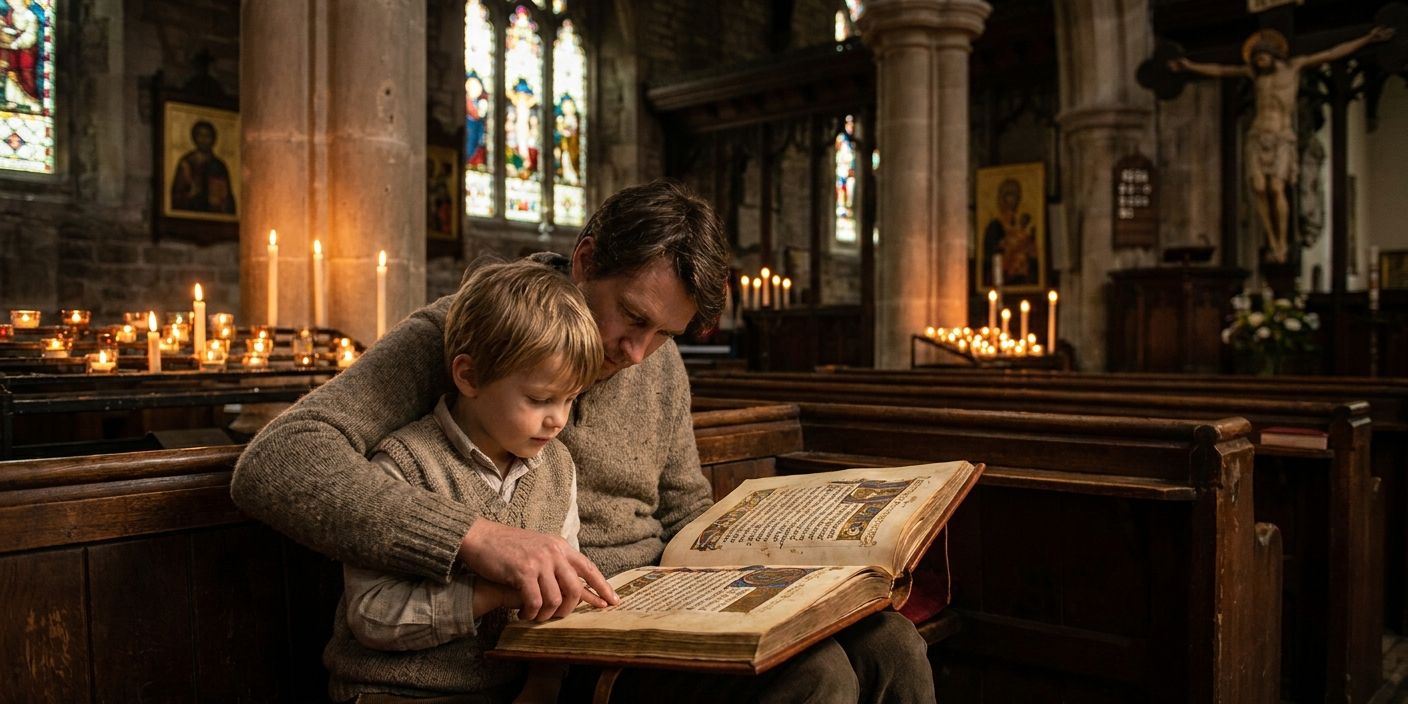

Before printing existed, the church transmitted its faith through memory. Catechumens preparing for baptism were expected to learn the Creed, the Lord's Prayer, and the Decalogue by heart. Memory was not a supplement to Christian formation — it was the vehicle of it. Reclaiming the practice of memorizing the creeds is not an exercise in nostalgia; it is a recovery of one of the church's oldest and most formative disciplines.
The ancient church required catechumens to memorize the Apostles' Creed before baptism. The process was called the traditio symboli — the handing over of the creed — in which the bishop formally presented the creed to candidates who were then expected to return it (the redditio symboli) by reciting it from memory before the congregation. This solemn exchange dramatized what was happening: the faith of the whole church was being entrusted to a new believer, who was now responsible to carry it and pass it on.
Something happens when you memorize a creed that cannot happen when you merely read it. The words take up residence in you. They become part of the furniture of your mind, available for recall in moments of doubt, fear, suffering, or confusion. The ancient theologians spoke of Scripture and creed as spiritual food. Memorization is the act of eating — of taking these words inside and being shaped by them from within.
Christians who know the Apostles' Creed by heart have a resource available in extremis — in the hospital, in the dark night of the soul, in the final hours of life. There are accounts of dying Christians who could no longer form coherent sentences but could still recite the creed. The memorized words of faith outlast the mind's capacity to produce new ones. This is one of the most powerful arguments for the practice.
Memorizing the creeds also forms Christians theologically in ways that feel more like worship than study. The Apostles' Creed is not a theological treatise; it is a doxological narrative. To say it is to rehearse the story of God: Father, creator; Son, redeemer; Spirit, sanctifier. The Nicene Creed deepens this with precise Trinitarian language drawn from centuries of careful reflection on Scripture. To memorize either creed is to internalize a grammar of worship.
The practical approach matters less than the commitment. Some learn by repetition — reciting the creed aloud each morning until it is fixed. Others use the creed as a framework for prayer, pausing on each phrase to pray through its meaning. Parents can teach it to children as they teach nursery rhymes — playfully, repeatedly, until it becomes as natural as breathing. Whatever the method, the goal is the same: that the faith of the church becomes the faith of the person, not as a borrowed formula but as one's own confession.


