Why Historic Church Creeds Still Matter in a Postmodern World
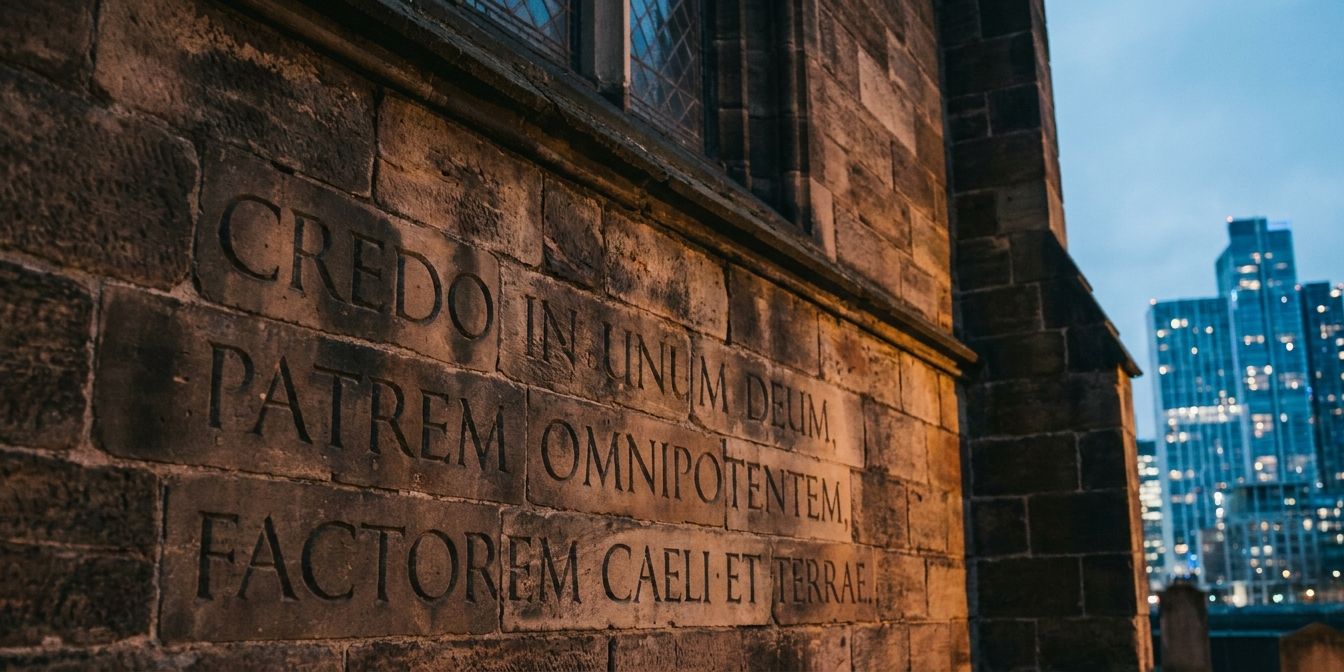

“No Creeds, Just Jesus”? Why the Question Matters
In a culture that prizes authenticity and distrusts institutions, many Christians feel uneasy about formal statements of faith. Slogans like “no creed but Christ” or “just give me the Bible” sound humble and spiritual.
Yet the historic church creeds—especially the Apostles’, Nicene, and Athanasian—were crafted precisely to guard our devotion to the biblical Jesus. Far from replacing Scripture, they summarize its central message.
Creeds as Maps, Not Replacements
Think of the creeds as maps drawn from the Bible. A good map does not compete with the landscape; it helps you navigate it. In the same way, the creeds condense key biblical teachings about God, Christ, salvation, and the church.
When someone says, “I believe in Jesus,” the next question is, “Which Jesus?” The creeds answer with Scripture-shaped clarity: Jesus is the eternal Son, fully God and fully human, crucified, risen, ascended, and returning in glory.
Creeds Protect the Church from Drift
Every era faces new pressures to reshape the faith around cultural preferences. The early church battled denials of Christ’s divinity and humanity. Today we may face challenges around exclusivity, judgment, or the uniqueness of Christ.
By anchoring us to what Christians have always confessed, creeds act like a plumb line. They help us test new ideas, sermons, and teachings against the historic faith rather than our feelings or trends.
Creeds Unite Believers Across Time and Traditions
The ecumenical creeds are shared across many denominations. When we confess them, we join our voices with believers from different cultures, languages, and centuries.
This doesn’t erase our differences, but it reminds us that the core of Christianity is bigger than any one movement or style. In a fragmented age, this visible unity is a powerful witness.
Creeds Shape Worship and Daily Discipleship
Reciting a creed in worship is not empty ritual when done with understanding. It is a weekly act of reorientation—rehearsing the gospel story and reaffirming our trust in the triune God.
At home, families and individuals can use the creeds as frameworks for prayer and Bible reading. Each phrase opens a door into Scripture and invites reflection and praise.
Historic church creeds still matter because they keep us rooted in the biblical gospel, connected to the global church, and steady amid cultural change. They are gifts, not chains—tools to help us treasure Christ more deeply.


