The Canons of Dort: What the Church Decided About Salvation

The Arminian Controversy
In the early 1600s, a group of Dutch theologians known as the Remonstrants (followers of Jacob Arminius) challenged the Reformed teaching on predestination and grace. They presented five points of objection — on election, atonement, human ability, grace, and perseverance — to the Dutch Reformed Church, which convened an international synod to respond.
The Synod of Dort
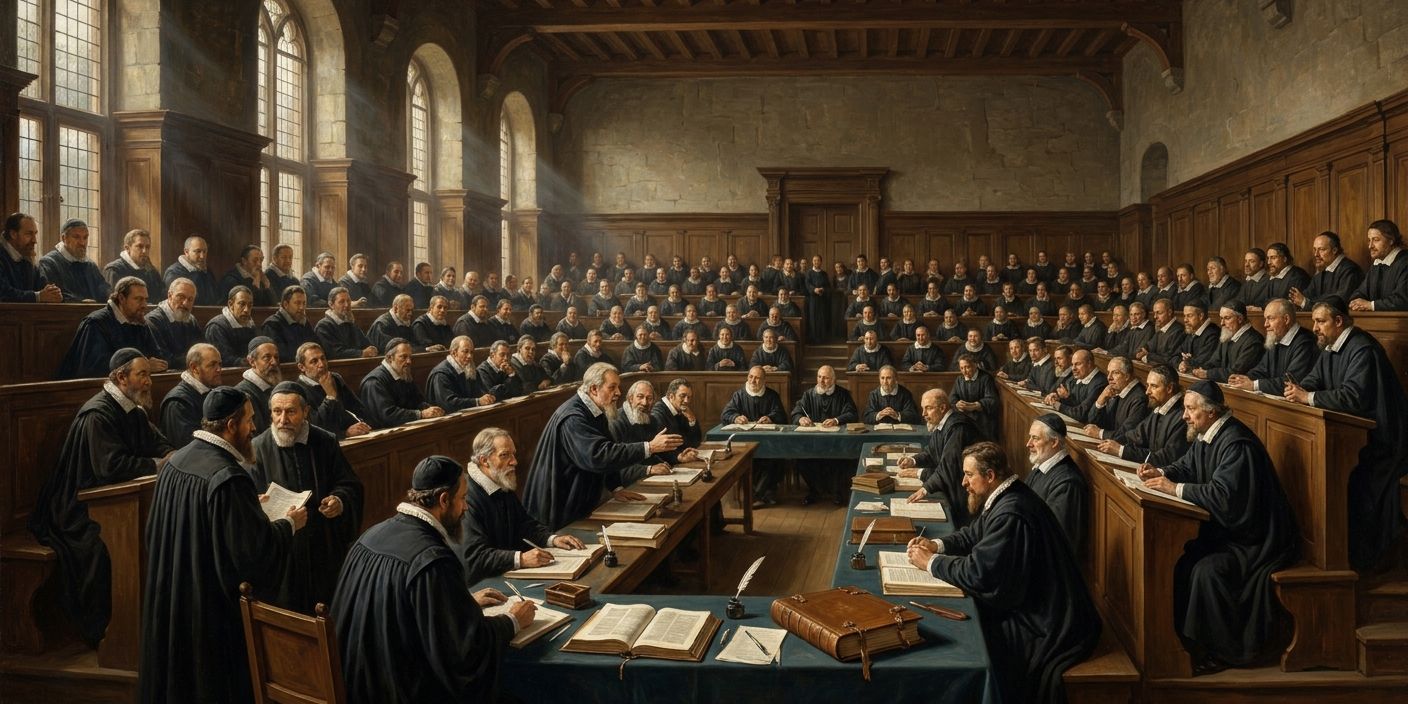
The Synod of Dort met from November 1618 to May 1619. It was the most international gathering of Reformed churches to that point, drawing delegates from the Dutch Republic, England, Scotland, Germany, Switzerland, and France. The result was the Canons of Dort, which addressed the five Arminian points directly.
The Five Points
The five heads of the Canons correspond to what is often remembered by the acronym TULIP: Total Depravity (humanity is wholly corrupted by sin), Unconditional Election (God’s choice is not based on foreseen faith), Limited Atonement (Christ’s death secures salvation for the elect), Irresistible Grace (God’s call cannot ultimately be refused), and Perseverance of the Saints (the elect will not finally fall away).
More Than an Acronym
The Canons are more nuanced than the TULIP acronym suggests. They are not primarily a negative response to Arminianism but a positive unfolding of the biblical teaching on grace and election. They are deeply pastoral, acknowledging mystery and guarding against both pride and despair.
Part of the Three Forms of Unity
Along with the Belgic Confession and the Heidelberg Catechism, the Canons of Dort form the Three Forms of Unity, the confessional standards of many Reformed churches worldwide.
Read the Full Canons
Explore the Canons of Dort in full at CanonsOfDort.com.


